Your Zip Code Is a Syllabus: Building a Free Art Education From What's Already Around You

Somewhere along the way, we got convinced that learning a creative skill requires a login. A platform. A monthly fee and a progress bar. But ask any working artist how they actually learned, and you'll hear about the print shop guy who let them sweep floors, the community theater that needed a stagehand, the free museum day where they stood in front of one painting for forty minutes.
The truth is that most American towns — even small ones — are sitting on a scattered, underused creative campus. You just have to enroll in it on purpose.
Start With a Resource Audit, Not a Syllabus
Before you plan anything, spend one afternoon listing what your area actually has. Libraries (especially ones with maker spaces or tool lending). Community colleges with open lectures. Museums with free or pay-what-you-wish days. Craft stores that run demo weekends. Print shops, framing shops, sign shops — places where skilled people do skilled work all day and are often happy to talk about it.
Don't filter yet. Just write it all down. Most people are surprised at how long the list gets. A mid-sized town can easily produce twenty items, and a city can produce a hundred.
Assign Each Resource a Job
A pile of resources isn't an education — it becomes one when everything has a purpose. Think of it like course requirements:
- Theory: Museum visits, library art books, architecture walks
- Technique: Maker space workshops, craft store demos, rec center classes
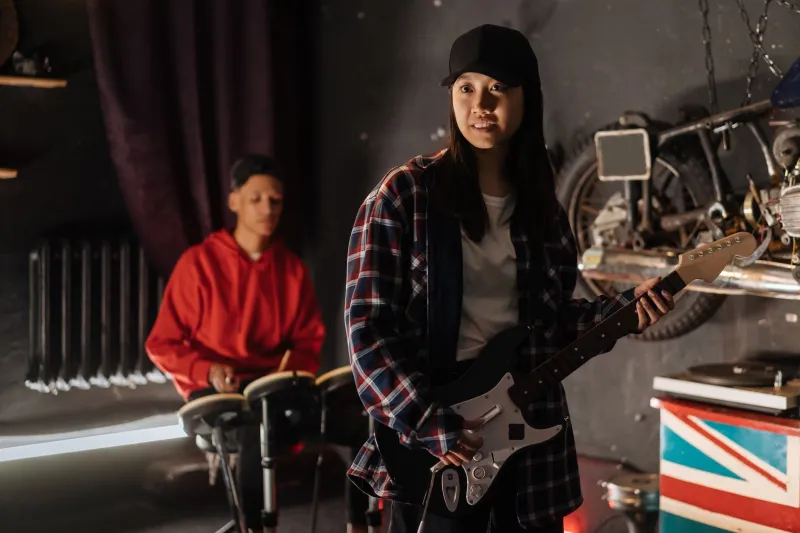
- Practice: Community theater, open mic nights, choirs, sketch groups
- Mentorship: That letterpress operator, the retired illustrator at the senior center, the potter at the farmers market
You're not looking for one perfect teacher. You're assembling a faculty from whoever's already there.
Your Four-Week Starter Plan
Here's a realistic month to get rolling. Adjust for what your town actually offers.
Week 1: Reconnaissance. Get the library card. Check the maker space hours. Pull the events calendar from your local paper and the parks department. Show up to one thing — anything — with no agenda beyond being in the room.
Week 2: Skill contact. Take one hands-on session: a welding demo at the hardware store, a community ed watercolor night, a 3D printer orientation. Hands beat headphones every time.
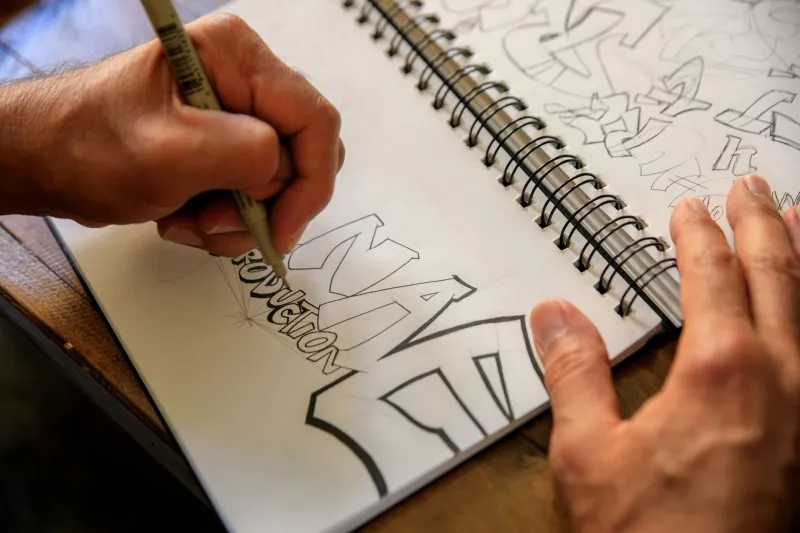
Week 3: Observation deep-dive. Pick one museum piece or one public building and study it like homework. Sketch it, write about it, figure out why it works. This is the reading part of the degree.
Week 4: Join something recurring. Audition for the community theater, even for a backstage role. Join the weekly figure drawing session. The magic isn't the first visit — it's the fourth.
The Working Artists Hiding in Plain Sight
Here's the most overlooked resource in your entire town: people who already do the thing. The framer at the shop who's mounted thousands of pieces. The sign painter. The high school art teacher who moonlights in ceramics.
Most of them aren't on YouTube. They're at work. And unlike a course instructor, they'll answer real questions about real problems — how to price a commission, what paper actually holds up, why your kiln keeps cracking things.
The ask is simple: "I'm teaching myself this. Can I buy you a coffee and ask a few questions?" Some will say no. Some will become the most valuable part of your education.
Why Immersion Outpaces Subscriptions
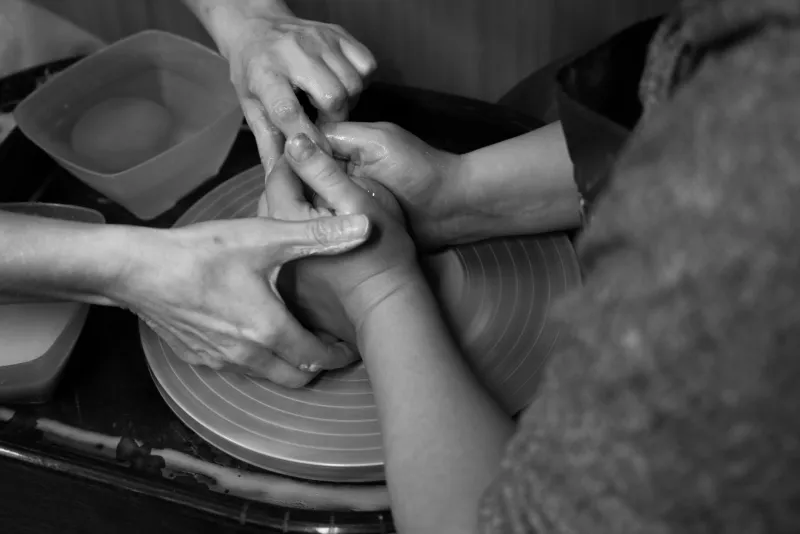
Course platforms are great at delivering information. But information isn't the bottleneck for most creative learners — context is. Watching someone glaze a pot teaches you the motion. Standing in a studio that smells like glaze, hearing why the kiln failed, watching a real person problem-solve in real time — that teaches you the judgment.
Real creative communities also give you something no platform can: witnesses. People who see your work change over months. That gentle accountability is why the rec center class outperforms the course you abandoned at module three.
Keep a Transcript
Once a month, write down what you learned, what you made, and who you met. It sounds corny, but it does two things: it shows you the curriculum is real, and it reveals the gaps. Three months of museum visits with zero hands-on work? Time to fix the balance.
Your town has been quietly running a creative school this whole time. Tuition's free. Enrollment is just showing up.