The $40 Pottery Wheel Down the Street: Why Your Rec Center Beats That Fancy Online Course
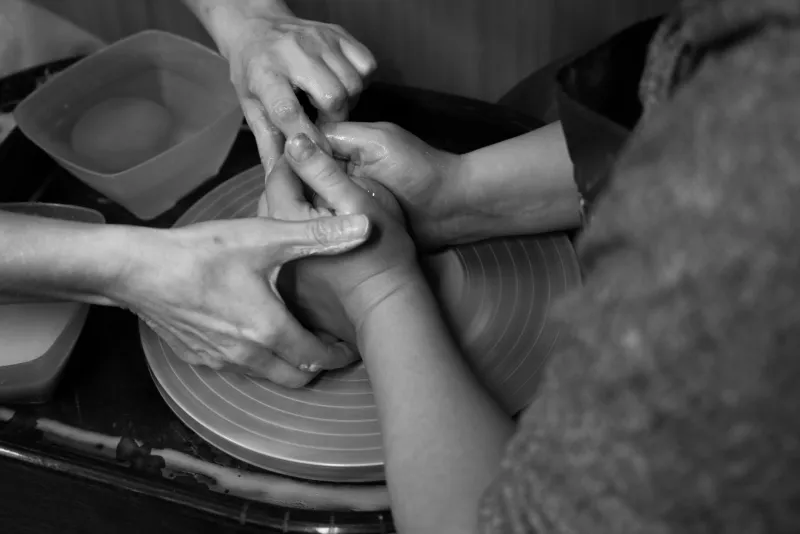
Somewhere along the way, we decided that serious creative education has to be expensive. If it doesn't come with a landing page, a countdown timer, and a payment plan, we assume it can't be legit.
Meanwhile, three miles from your house, a retired art teacher is running a Tuesday-night watercolor class at the community center for the price of a pizza night. And her students are actually finishing things.
The Math Nobody Shows You
Let's talk numbers, because the numbers are kind of embarrassing for the online course industry.
A flagship creative course from a big-name instructor typically runs $500 to $2,000. A six-week continuing ed class at your local community college? Often $100 to $250. A rec department pottery session with actual wheel time and a kiln? Frequently under $150, materials included. A library workshop is usually free — yes, free, funded by your tax dollars whether you use them or not.
But cost is the boring part. The real difference is what you get for that money.
What a Room Full of Strangers Does That a Video Can't
Online courses are great at delivering information. They're terrible at delivering the three things that actually keep beginners going:
Accountability. When Doris from your Thursday ceramics class asks how your bowl turned out, you show up. When a course module asks, you click "remind me later" for six weeks and then buy another course.
Real-time feedback. A video can't tell you that you're choking up on your brush or wedging your clay wrong. A teacher standing behind you can fix that in ten seconds.
Proof that it's possible. In a community class, you're surrounded by people at every stage — the retiree on year twelve, the teenager who's weirdly gifted, the accountant who signed up on a whim. Progress stops being abstract.
There's a reason so many working makers trace their start back to a rec center, a guild, or a community college night class. The path is unglamorous and it works.
From Rec Center to Real Work
You don't have to look hard to find these stories. Potters who started in a church-basement class now selling at regional craft fairs. Quilters who joined a guild workshop and ended up with an Etsy shop. A guy in Ohio who took a $90 community college welding-for-artists course and now does commissioned metalwork.
The pattern is always the same: low stakes, in-person instruction, then a community that pulls them deeper. Nobody's saying a rec center class alone makes you a professional. It's the on-ramp — the cheap, low-pressure place to find out if the thing actually grabs you before you invest serious money in it.
Which is exactly backwards from how most of us do it. We buy the $1,500 course first, burn out by module four, and conclude we're "not creative."
Your Weekend Audit: Five Places to Check
Here's your assignment, and it takes about an hour with a cup of coffee:
1. Your parks and rec department. Search "[your town] parks and recreation classes." Look past the kids' soccer — most departments run adult art, pottery, photography, and woodworking programs you've never heard of.
2. Your public library. Beyond book clubs, many libraries now host writing workshops, intro design classes, and even maker spaces with 3D printers and laser cutters. Ask at the desk; the good stuff often isn't on the website.
3. Community college continuing ed. Skip the degree catalog and find the "community education" or "personal enrichment" section. Non-credit courses in drawing, sewing, and digital design are typically open to everyone and priced for regular humans.
4. Local craft guilds and clubs. Pottery guilds, quilting circles, woodworkers' associations, plein air painting groups. Most charge modest annual dues and welcome beginners, and the collective knowledge in one guild meeting is worth a semester.
5. Senior centers and faith community halls. Don't let the label fool you — these spaces often host the cheapest, most welcoming art classes in town, and nobody checks your birthdate at the door.
How to Judge a Class Before You Commit
Not every local class is a gem. Run any candidate through this quick filter:
- Is there hands-on time, or is it all demonstration? You want your hands dirty in session one.
- What's the class size? Anything over 15 for a hands-on craft means diluted attention.
- Does the fee include materials? Kiln firing, glazes, and lumber can quietly double the cost.
- Can you visit or drop in once? Most rec departments will let you observe a session. Take them up on it.
- Is there a follow-on? The best programs offer levels, so momentum doesn't die after six weeks.
The Uncomfortable Truth About "Premium" Education
Here's the thing the course-sellers won't tell you: the expensive option's biggest advantage isn't better teaching. It's better marketing. A polished sales page triggers something in our brains that a flyer taped to a library door doesn't.
But learning doesn't care about production value. It cares about reps, feedback, and showing up somewhere regularly with other people who are also bad at it and doing it anyway.
So before you check out on that big-name course, spend one Saturday checking what your town already offers. Worst case, you're out $40 and a few hours. Best case, you find your thing — and a room full of Dorises to keep you honest while you chase it.