48 Hours, One New Skill: A Weekend Sprint That Actually Works
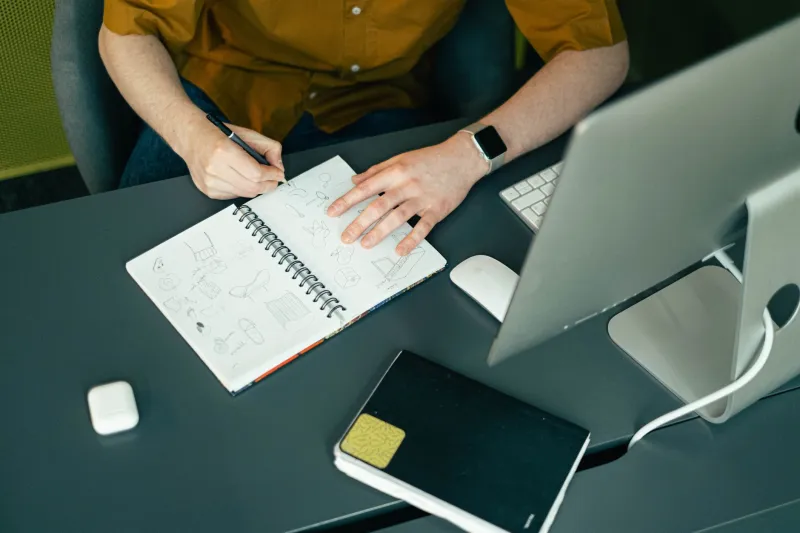
Saturday morning, 9 a.m. You've got a fresh sketchbook (or a trial version of Procreate, or a $12 calligraphy pen from Michael's), a pot of coffee, and absolutely no idea what you're doing. By Sunday night, you won't be a pro — but you could genuinely surprise yourself.
That's the promise of the weekend skill sprint: one focused, distraction-free push to learn the foundations of a creative discipline. It sounds like a gimmick. It's not, as long as you go in with the right expectations.
Why Two Days Beats Two Hours a Week (For Now)
There's a reason cramming works differently than drip-feeding. When you learn in one concentrated block, you keep context loaded in your brain. You don't spend the first 20 minutes of every session remembering where you left off — you just keep building. Learning researchers call this reducing "retrieval friction," and it's why an intense weekend often gets you further than a month of scattered 30-minute sessions.
The catch: a sprint builds momentum, not mastery. Think of it as laying the foundation of a house, not moving in.
Your 48-Hour Learning Plan
Here's the framework — it works for calligraphy, digital illustration, video editing, watercolor, you name it. I'll use digital illustration as the running example.
Saturday, 9–11 a.m. — The Orientation Hour(s) Don't touch the tools yet. Watch two or three beginner tutorials start-to-finish, taking rough notes on vocabulary. You want to know what a layer is, what a brush engine does, what people mean by "line weight." You're building a mental map before you drive.
Saturday, 11 a.m.–1 p.m. — First Contact Open the app. Make ugly marks. Fill a canvas with scribbles, test every brush, break something on purpose. Your only goal is to stop feeling intimidated by the software.
Saturday, 2–5 p.m. — Copy Something Pick a simple reference — a piece of fruit, your coffee mug, a cartoon character — and recreate it as best you can. Copying isn't cheating; it's how nearly every artist alive learned. Expect it to look rough. That's data, not failure.
Saturday evening — Walk Away Seriously. Watch a movie. Sleep on it. Your brain consolidates motor skills overnight, and Sunday-you will be measurably better than Saturday-you.
Sunday, 9 a.m.–noon — Deliberate Reps Now drill the fundamentals: three studies of the same object, each time focusing on one thing — shape first, then line quality, then simple shading. Short, targeted repetitions beat aimless doodling.
Sunday, 1–4 p.m. — The Real Project Make one finished piece. Something with a beginning, middle, and end that you'd actually show a friend. This is the psychological anchor — the moment "I'm learning illustration" becomes "I made this."
Sunday, 4–5 p.m. — Review and Plan Write down three things that went wrong and one tutorial to watch next. Then schedule your first weekday session before the weekend glow fades.
What You'll Actually Learn in a Weekend
Honest accounting, based on doing this with calligraphy, illustration, and basic video editing:
- Realistic in 48 hours: navigating the tools, understanding core vocabulary, producing one passable piece, and knowing exactly what to practice next.
- Not realistic: speed, personal style, consistency, or anything that resembles professional quality.
Style and speed come from volume — hundreds of hours of it. A weekend sprint doesn't replace that; it just gets you to the starting line with your shoes tied.
The Follow-Up Matters More Than the Sprint
The biggest risk of a weekend intensive isn't failure — it's the crash. If you don't touch the skill again for three weeks, the sprint evaporates. Protect 20 minutes, three evenings a week, for at least the following month. That's the difference between "I tried illustration once" and "I'm learning illustration."
Pick a skill. Block the weekend. Make something imperfect. Then keep the streak alive.